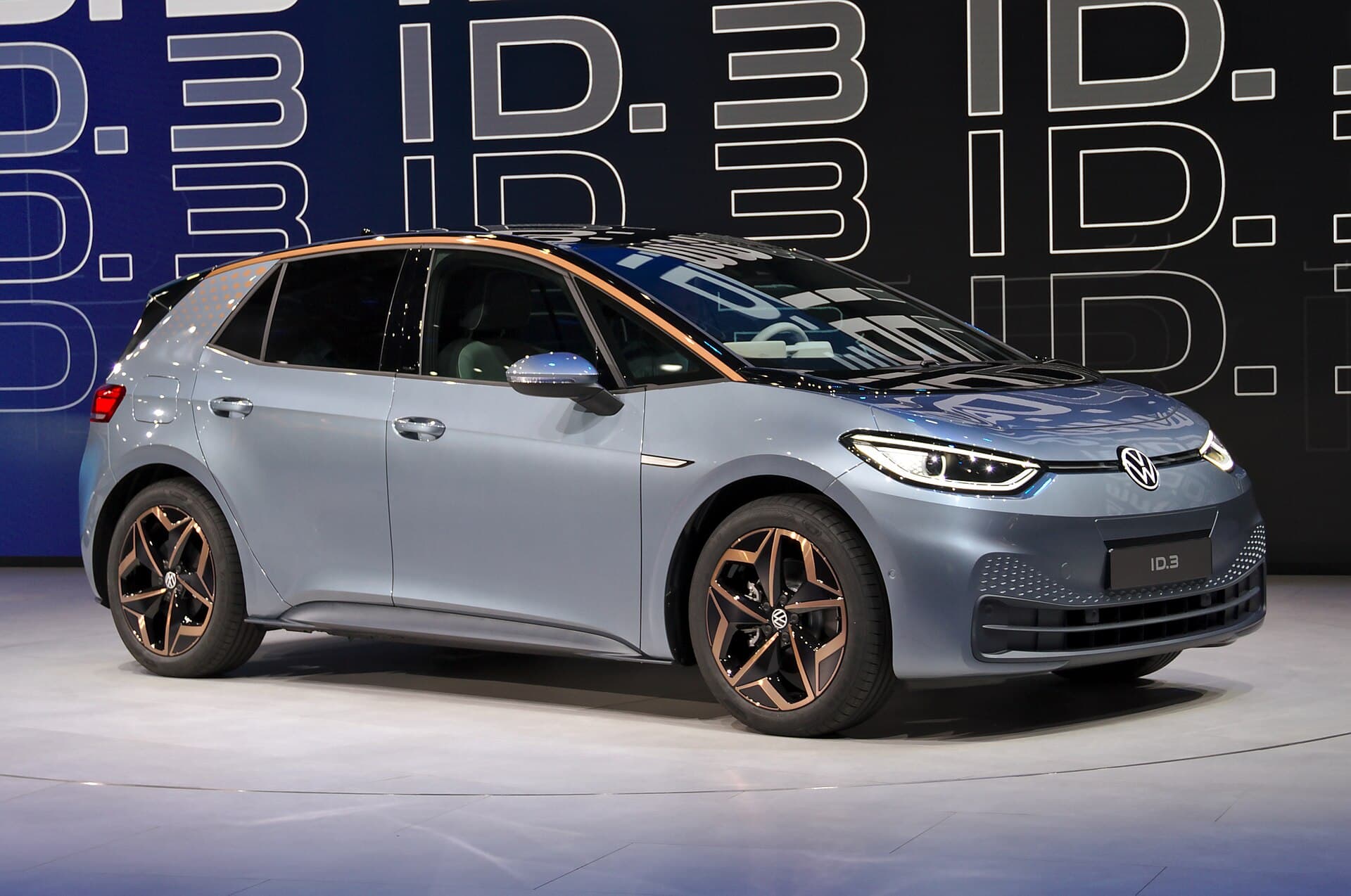
Photo: Alexander Migl (CC BY-SA 4.0)
Complete guide
Electric car: the complete guide (range, price, charging, incentives)
August 26, 2026
By Hugo Beignon, Founder of ma-borne-electrique.com
Real-world range, purchase and running costs, government incentives, and charging options: here's everything you need to know before switching to an electric car, or to get more out of the one you already have.
How does an electric car work
An electric car replaces the combustion engine with one or more electric motors, powered by a rechargeable lithium-ion battery. There's no traditional gearbox, no clutch, no exhaust: driving is quieter, smoother, and mechanical maintenance drops by roughly 30 to 40% compared with an equivalent combustion vehicle, since there's no oil change, timing belt, or clutch to replace.
What range can you expect from an electric car?
The range advertised by manufacturers follows the WLTP cycle, measured under standardised conditions. In real-world use, expect around 10 to 20% less, more still in cold weather or on the motorway.
| Segment | WLTP range | Estimated real-world range |
|---|---|---|
| City car | 300 to 400 km | 250 to 340 km |
| Compact / saloon | 400 to 550 km | 340 to 470 km |
| Family SUV | 450 to 600 km | 380 to 500 km |
| Premium long-range saloon | 600 to 750 km | 500 to 650 km |
Approximate figures observed on recent models (2024-2026), for guidance only.
What makes range vary
Outside temperature (cold can cut range by 20 to 30%), speed (driving at 130 km/h uses noticeably more energy than at 90 km/h), driving style, load, and use of air conditioning or heating all strongly affect real-world range. Anticipating traffic and eco-driving can recover 10 to 15% of range in everyday use.
Purchase and running costs: electric vs combustion
Upfront, an electric car remains on average 20 to 40% more expensive than an equivalent combustion model. That gap narrows sharply in use thanks to lower charging and maintenance costs.
| Item | Electric car | Combustion car |
|---|---|---|
| Purchase price (new city car) | €25,000 to €35,000 | €18,000 to €25,000 |
| Cost per 100 km (energy) | €2.50 to €12 depending on charging | €8 to €12 |
| Average annual maintenance | €150 to €300 | €400 to €600 |
| Tax penalties / benefits | Usually exempt | Possible penalty based on emissions |
Indicative 2026 figures, for comparison purposes. They vary by model, annual mileage, and charging method used.
Grants and incentives for buying an electric car
Many European countries, including France, Germany, and Spain, offer or have offered government and regional incentives for buying or leasing an electric car: purchase grants, scrappage schemes, or subsidised leasing for lower-income households. These schemes change frequently and vary by country, so always check the current official rules for your country before buying.
Charging your electric car: at home, at work, on the road
Around 80 to 90% of charging happens at home or at work, on a reinforced socket or a wallbox. For longer trips, a network of rapid chargers lets you recover 20 to 80% of battery in 20 to 40 minutes. The right connector (Type 2 for everyday use, Combo CCS for rapid charging) depends on your vehicle: our charging connector guide covers each standard, its power, and charging time.
Pros and cons of the electric car
The strengths
- Lower running costs: cheaper charging and maintenance than a combustion car over time.
- Quiet, comfortable driving, with no vibrations or petrol smell.
- Instant acceleration thanks to torque available from a standstill.
- Zero tailpipe emissions, and a lower overall carbon footprint over the vehicle's lifecycle in most studies.
The things to watch
- Purchase price still high, despite available incentives.
- Range and charging time to plan for on longer trips.
- Rapid charging network still uneven depending on the region.
- Resale value and battery ageing to keep an eye on for older models.
How to choose your electric car based on your needs
- Daily urban driving (under 50 km/day): a city car with 300 to 350 km of WLTP range is more than enough, with a full charge overnight on a wallbox.
- Family use and regular trips: favour a compact SUV or saloon with 400 to 500 km of range, enough boot space, and rapid charging of 100 kW or more.
- Frequent long trips and motorway driving: choose a model with over 500 km of WLTP range and rapid charging above 150 kW, to keep stops short.
Frequently asked questions
How much real-world range should I expect from an electric car?
Real-world range is usually 10 to 20% lower than the advertised WLTP figure, and the gap can widen in cold weather or on the motorway.
Is an electric car more expensive than an equivalent petrol or diesel model?
Yes, upfront, typically 20 to 40% more, but the gap narrows a lot in use thanks to cheaper charging and maintenance, around 150 to 300 euros a year versus 400 to 600 euros for a combustion car.
What financial incentives exist for buying an electric car in France?
The main schemes are the ecological bonus, the scrappage bonus, and social leasing for lower-income households, though their amounts and conditions change every year.
Where do most people charge their electric car?
About 80 to 90% of charging happens at home or at work, on a reinforced outlet or a wallbox, while the fast-charging network is mostly used for long trips.
Ready to go electric? Find a charging station near you to plan your first trip.